
Bra Center Gore Doesn't Lie Flat Against Your Chest — What's Wrong?
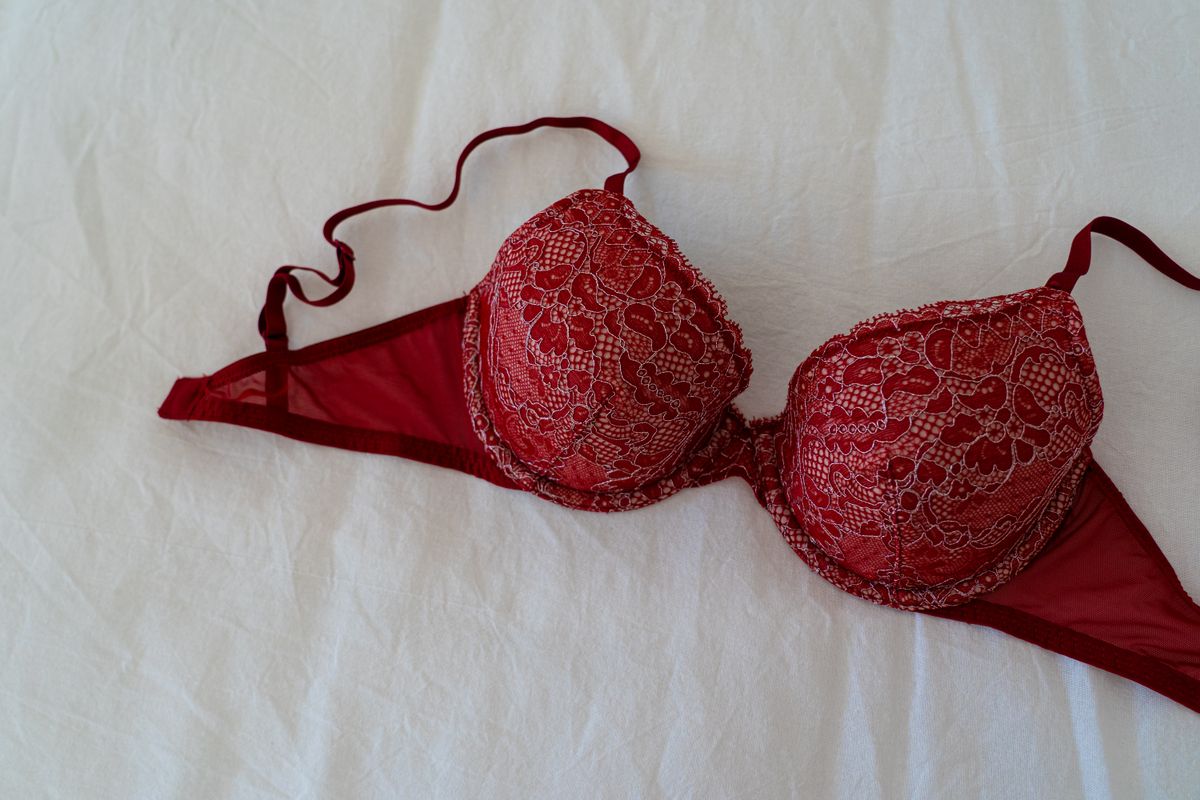
If the little panel between your bra cups won't rest flat on your chest — it floats, tents, or sits a centimetre off your breastbone — here's the reassuring news: a center gore that doesn't lie flat is almost always a sizing clue, not a body flaw. Nine times out of ten, the cup is simply too small, and your breast tissue is pushing that panel forward.
That panel is called the center gore (or center tack), and where it sits is one of the fastest ways to read a bra's fit. Below: what it is, the 4 real reasons it floats or digs, the quick test, and the right style for your breast spacing.
What is the center gore (and why it matters)?
The center gore is the small strip of fabric that joins the two cups at the front, sitting right against your breastbone. It has three jobs: it keeps your breasts separated (no "uni-boob"), it anchors the bra steady on your body, and it holds the cups in the right position.
Think of it like the centre pole of a tent. The pole only touches the ground when the canvas around it is pulled taut from both sides. If the cups can't hold your tissue, the "canvas" pulls the pole up — and the gore lifts off your chest. So a floating gore is rarely about the gore itself; it's about what the cups and band around it are doing. On a bra that fits, it should lie flat and flush, no gap, no digging. (Bra anatomy calls this the gore or centre panel.)
Why it floats: the cup is too small

This is the number-one cause. When the cup can't hold all your breast tissue, that tissue has nowhere to go but forward — and it pushes the gore off your chest. You'll usually see spillage over the top or sides at the same time. (Your tissue is soft and has no muscle; it sits on the skin and the Cooper's ligaments, so a too-small cup simply shoves it out front.)
The fix: go up a cup size — and because cup volume is relative to the band, use a sister size (down a band, up a cup, e.g. 34C → 32D) so the band stays snug. As soon as the cup holds everything, the gore drops flat. If the cup keeps overflowing, our guide to breast spillage goes deeper.
The band too loose does it too
A loose band is the runner-up cause. When the band can't grip your ribcage, the cups and straps end up doing its job, and the whole front lifts — taking the gore with it. Quick test: raise your arms; if the band rides up your back, it's too loose. Size the band down (and the cup up to match). Our band riding up guide covers this in full.
Why it presses: the cup is too large (or the gore is wrong for you)

The opposite problem — the gore digging into the middle of your chest — usually means one of two things:
- The cup is slightly too big, so the bra slides inward and the gore presses where it shouldn't. Size down the cup.
- The gore is too tall or wide for how your breasts sit. A high, stiff gore needs room between the breasts to settle; if yours sit close together, it has nowhere to go and jabs your sternum.
There's also a third, gentler case: very soft or full tissue right at the centre of your chest. Even at the right size, the panel may rest on that tissue rather than flat against bone. That's not a fault — it just means a softer, lower gore will be more comfortable than a stiff, tall one.
How to test your center gore placement

Put the bra on, do the scoop (lean forward, settle all your tissue into the cups, stand up), then check the middle in a mirror:
- Press a fingertip on the gore. It should already be touching your breastbone — no gap to push through.
- Look from the side. The panel should sit flush and upright against your chest, not tilting out at the top.
- Notice comfort. No poking, no pinching at the sternum. Pressure there means the gore is too tall or the cup too big.
- Check the partners. A floating gore almost always comes with spillage (cup too small) or a riding-up band (band too loose) — fix those and the gore usually follows.
If it tacks flat and feels like nothing, you've nailed it. If it still floats after sizing up the cup and snugging the band, the issue is style — read on.
A quick decision, in one line: floating plus spillage means the cup is too small (size up). Floating plus a band that rides up means the band is too loose (size the band down, the cup up). Floating with the size otherwise spot-on means it's a style-and-shape match — time to change the gore height, not the number. Working out which of the three you have saves you buying the wrong "fix."
Wide-set vs close-set breasts: matching the gore to you
Breast spacing is just normal anatomy — like the gap between your eyes, it's simply how you're built, never a defect. It matters only because the gore should suit it:
| Your breasts sit… | What happens with the wrong gore | Best gore / style |
|---|---|---|
| Close together (close-set) | A tall, wide gore has no room and digs in | Low, narrow gore — plunge styles, wires set close with little gap |
| Far apart (wide-set) | A standard gore can float, or you get a gap at the centre | Cups that gently gather tissue inward — balconette or full-coverage |
| Average, full all round | Usually fine | Medium to tall gore, everyday or full-cup styles |
Best bra styles for close-set breasts
If your breasts sit close together and a normal gore pinches, go for a plunge bra. Its low, short centre means the panel can rest on your breastbone instead of fighting for space between the cups. Look for wires set close together with little or no gap in the middle.
Best bra styles for wide-set breasts
If your breasts sit further apart, a stiff gore may float or leave a gap. Choose styles that bring tissue gently inward — a balconette (which lifts up rather than squeezing together) or a full-coverage cup with good side support. A slightly wider gore that matches your spacing will tack better than a narrow one. Padded or moulded cups can also help here, gently filling the centre so the gap closes — just remember padding shapes the look, it doesn't change the fit underneath. And if one breast sits closer in than the other, that's ordinary asymmetry; fit to the side that needs the most room and let the gore settle where it can.
Where to find the right style

Plunge and balconette styles aren't always on the local shelf, so a couple of honest pointers:
- Sort the size before the style. Most floating gores are a too-small cup — fix that first with a sister size, and many "gore problems" simply vanish.
- Shop online for shape options. Brand websites and online retailers carry far more plunge and balconette styles than most physical shops, and different brands each cut their gores a little differently, so try a couple.
- Heat note: in hot weather, soft moulded gores can feel stiffer and warmer — a lighter, flexible-wire style often sits more comfortably against the chest. Always try the gore test in the fitting room where you can.
The bottom line
Your center gore is a tiny panel that tells a big story: when it floats, the cup is almost always too small (or the band too loose); when it digs, the cup's too big or the gore's too tall for how your breasts sit. Size up the cup with a sister size, snug the band, and match the gore height to your spacing — low and narrow for close-set, gently gathering for wide-set. Get those right and that little panel disappears against your chest, exactly as it should.
NovellaFit has no shop and nothing to sell you, so the only thing we're pushing is the fit that works. New here? Meet the site on the about page, or work through the rest of our fit guides one problem at a time.
Frequently Asked Questions
What is the center gore on a bra?
It's the small fabric panel between the two cups, at the very front of the bra. It rests against your breastbone (sternum), keeps your breasts separated, and helps anchor the bra to your body. On a well-fitting bra it lies flat against your chest. When it floats off, sits crooked, or digs in, it's one of the clearest signs the size or style isn't right.
Why does the middle of my bra float away from my chest?
The most common reason is a cup that's too small — your breast tissue has nowhere to go, so it pushes the gore forward off your chest. A band that's too loose does it too, because the cups end up carrying weight they shouldn't. Sizing up the cup (a sister size keeps the band snug) or tightening the band usually drops the gore flat.
Why is the center of my bra digging into my chest?
Usually the opposite problem: a cup that's slightly too big, or a tall, stiff gore on breasts that sit close together. If you have close-set breasts, a high gore has nowhere to sit and presses into tissue. Try a plunge or a lower, narrower gore so the panel can rest on your breastbone instead of fighting for space.
Does the gore have to lie perfectly flat for everyone?
Almost — a flat, tacked gore is the goal and most women can reach it with the right size and style. But if you have very full or soft tissue right at the center, or wide-set breasts, a perfectly tacked gore can be hard, and that's normal. Aim for as flat as comfortable; a plunge style often gets you there when a full gore won't.
Are wide-set or close-set breasts a problem?
Not at all — breast spacing is just normal anatomy, like the gap between your eyes. It only matters because the gore should match it: close-set breasts suit a low, narrow gore (plunge styles); wider-set breasts do better with cups that gently bring tissue in, like a balconette or full-coverage. It's about matching the bra to you, not changing you.