
How to Measure Your Bra Size Correctly at Home — Complete Sizing Guide
So you bought a bra in the size the shop assistant called out, wore it for a year, and it still digs, rides up, or gaps at the top. Here's the good news: how to measure bra size at home takes about five minutes, a soft tape measure, and a mirror — and it's almost certainly more accurate than the guess you've been wearing.
The short version: measure snugly under your bust for the band, measure around the fullest part for the bust, and the difference between the two gives your cup. That's it. Below, we'll walk each step slowly, hand you a size chart, and point out the small mistakes that throw the whole thing off.
One promise before we start, because it matters: if your bras never feel right, it's almost never your body — it's the bra. Spillage, gaping, a band that climbs up your back — these are fit problems with fit fixes, not flaws. Let's find your real size.
What you need to measure your bra size
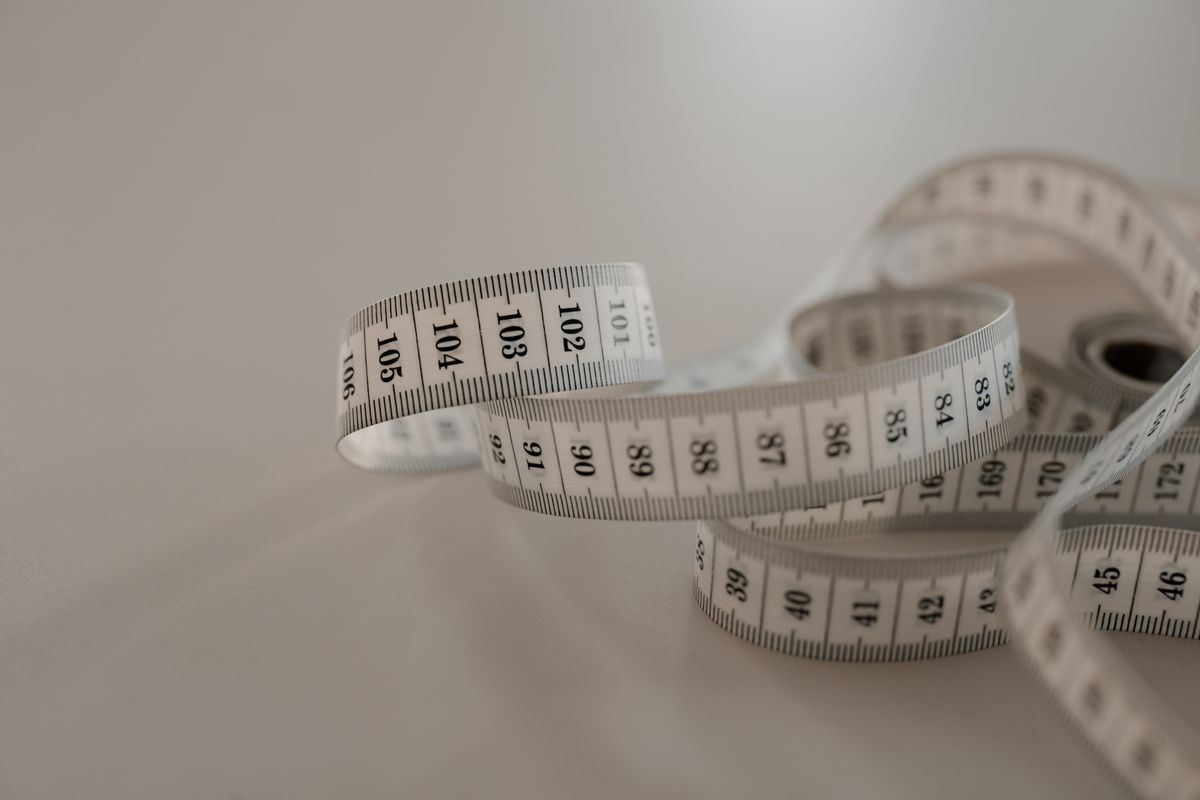
Almost nothing. You don't need a fitting-room appointment or a special device — just three everyday things:
- A soft measuring tape — the bendy cloth kind a tailor uses, not a stiff steel builder's tape. If you don't own one, see the FAQ for a string-and-ruler trick.
- A mirror — so you can keep the tape level all the way around your back.
- A thin, non-padded bra (or a soft bralette). Measuring over a thick padded bra adds inches that aren't yours; measuring fully bare can read a little small. A plain everyday bra is the sweet spot.
Wear the bra, stand up straight in front of the mirror, and breathe normally. Five minutes, start to finish.
What does your bra size actually mean?
Before the tape comes out, it helps to know what the two parts of a size — say, 34C — are even telling you.
- The number (34) is the band — the measurement around your ribcage. It's what holds the bra on and does most of the supporting.
- The letter (C) is the cup — how much room there is for the breast tissue. And here's the part that trips everyone up: the cup is relative to the band, not a fixed amount.
Think of a scoop of rice. The same scoop looks like more on a small plate and less on a big one — same rice, different plate. The cup letter is the scoop; the band is the plate. That's why 34B and 36B are not the same cup — a B on a bigger band holds more. So "I'm a B" means nothing on its own; it only means something next to its band number.
This one idea fixes half of all sizing confusion. It's also why two bras both labelled "your size" can fit completely differently — and why the steps below give you both numbers, not just a letter.
How to measure bra size at home in 3 steps
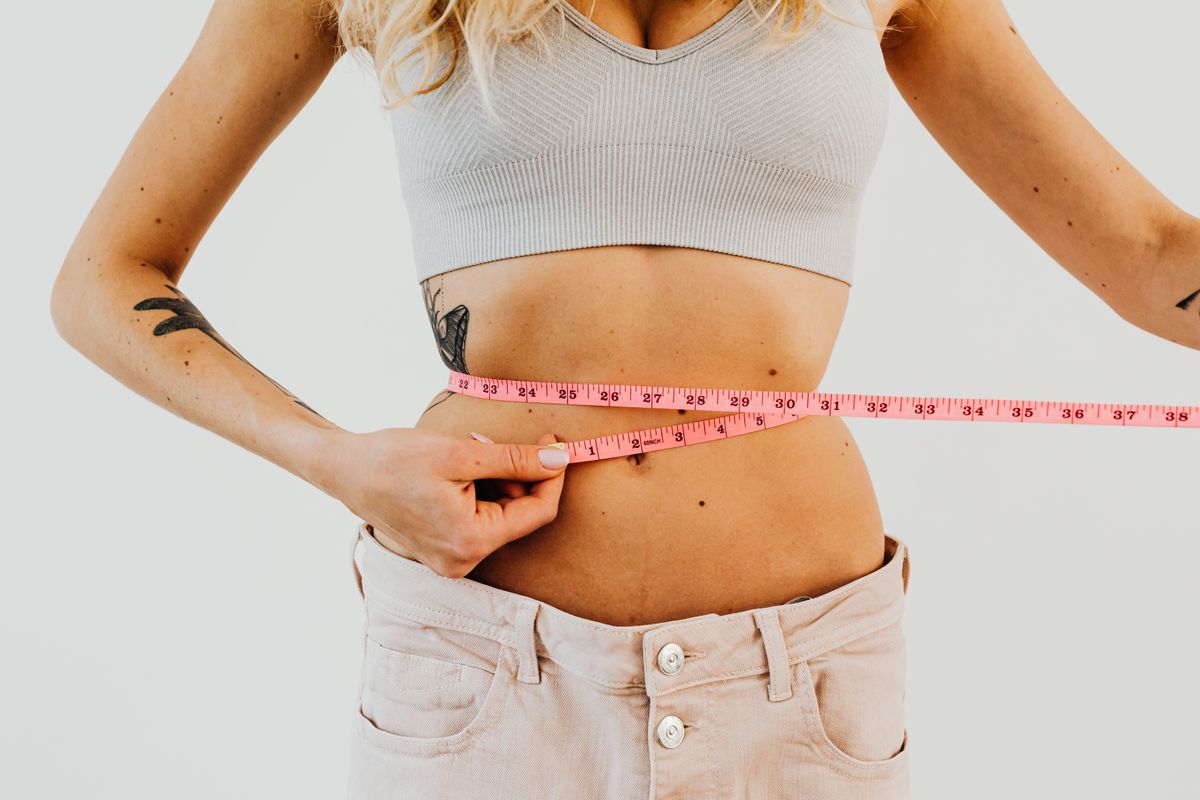
Think of your size as two separate things that work together, like a shoe: the band is the length around your ribcage, and the cup is the room for the breast tissue on top. Get both, and the label writes itself.
Step 1: Measure your band (underbust)
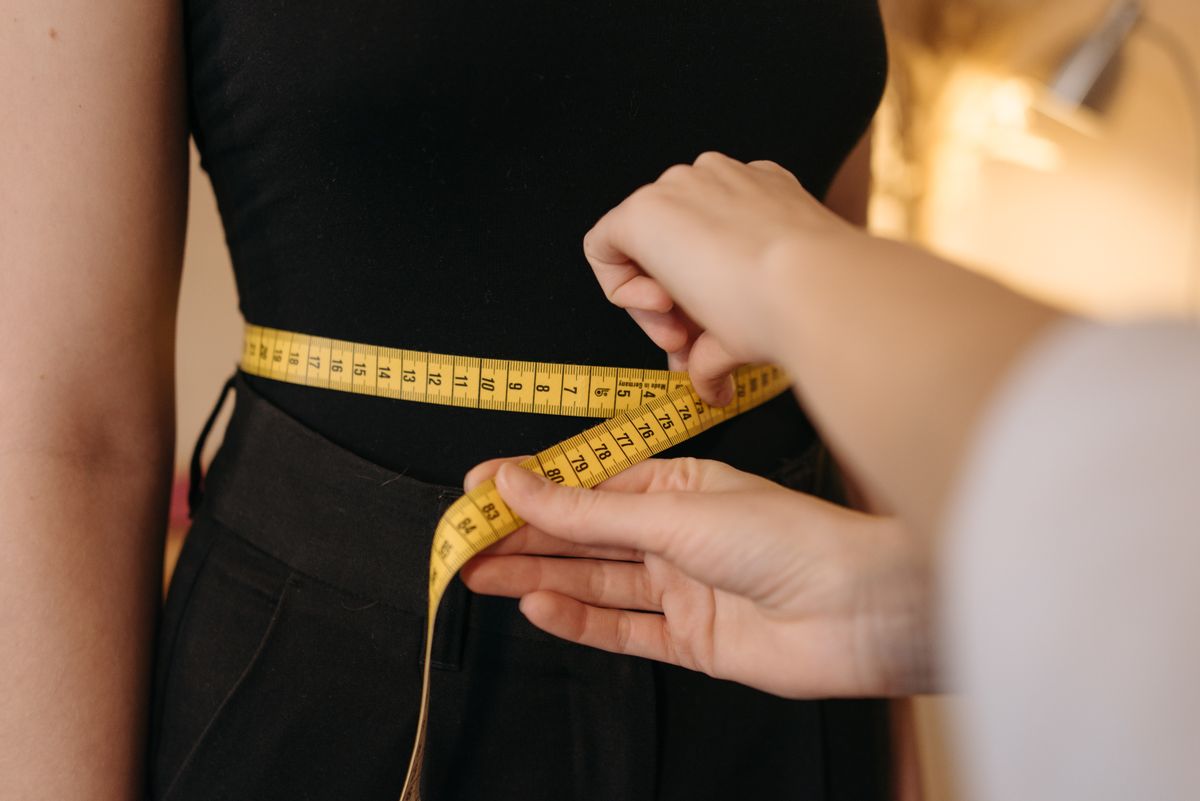
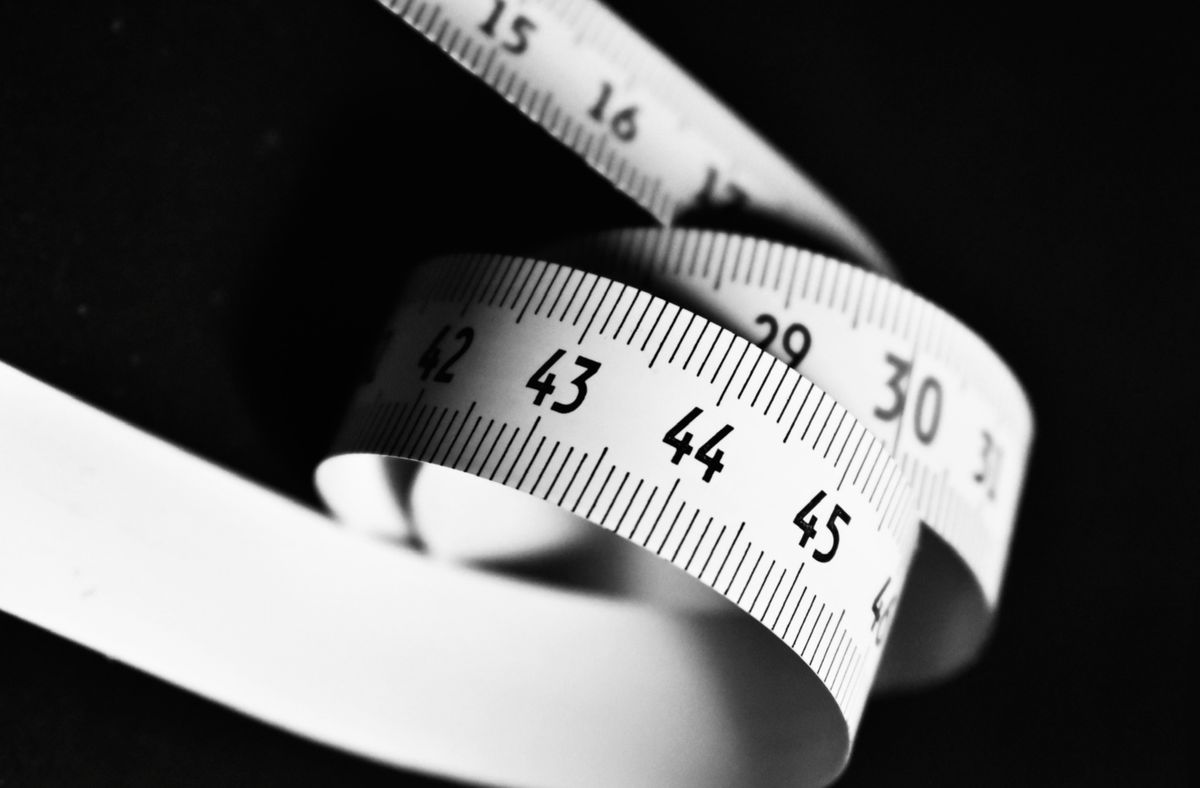
Wrap the tape around your ribcage directly under your bust, where the band of a bra sits. Keep it level all the way around — not riding up at the back — and pull it snug, the way a properly fitting band should feel. Breathe out, and read the number in inches.
That number, rounded to the nearest even number, is your starting band size. Measured 31? Start at a 32. Measured 34 on the nose? You're a 34 band.
Quick test: a good band is firm. If you can already tell the tape is loose enough to slide around, you've measured too gently — snug it up and read again.
Step 2: Measure your bust (fullest point)
Now wrap the tape around the fullest part of your bust — usually across the nipple line — keeping it parallel to the floor and only lightly resting against you. Don't pull this one tight; you're capturing volume, not squeezing it. Read the number in inches and round to the nearest whole number.
If the tape wants to slip down at the back, that's normal — use the mirror, keep it level, and take the reading twice to be sure.
Step 3: Calculate your cup (the difference)
Here's the part that confuses everyone, and it's genuinely simple: subtract your band number from your bust number. That difference, in inches, is your cup.
Bust 37 − Band 34 = 3 inches → C cup → 34C.
Each inch of difference is roughly one cup size:
| Bust − band difference | Cup (UK) |
|---|---|
| 0 inch | AA |
| 1 inch | A |
| 2 inches | B |
| 3 inches | C |
| 4 inches | D |
| 5 inches | DD |
| 6 inches | E (UK) |
| 7 inches | F (UK) |
A glass that's the wrong size tells on itself: too small and the water brims over the edge; too big and there's an empty gap. A cup is the same. We'll use that in the fit check below.
Should you add 4 inches? The old method vs the modern method
You'll still see guides telling you to add 4 inches to your underbust to get your band. Skip that. The "+4" rule comes from a stiff-fabric era decades ago, and on today's stretchy bands it lands most women in a band that's too big — which is the single most common fit mistake there is.
Here's why it backfires. The band carries most of your support — fitters commonly put it at around 80–90% of the work. When the band is too loose, that support job slides onto your straps, and that's what carves dents into your shoulders by evening. (Your breast tissue itself has no muscle holding it up — it leans on the skin and the Cooper's ligaments, which is exactly why a firm band matters so much.)
So: measure snugly and use that number. If you're truly on the fence between two bands, start with the tighter one — a new band should fit on its loosest hook, so it has room to tighten as the elastic relaxes over the months.
Bra size chart: UK vs US sizes
Once you have your numbers, a chart turns them into a label — but here's the honest bit nobody tells you: there is no single universal bra size. Band numbers and cups up to a D usually match across systems. Above a D, UK and US labels drift apart, and brands disagree with each other on top of that.
| Difference | UK cup | US cup (approx.) |
|---|---|---|
| 3 inches | C | C |
| 4 inches | D | D |
| 5 inches | DD | DD |
| 6 inches | E | DDD / F |
| 7 inches | F | G |
Size note: brands aren't consistent. Some follow UK sizing, some lean US, and plenty still sell plain S / M / L. So your "size" is really a starting point per brand. Whatever label you shop, check that brand's own chart rather than assuming your number carries over.
Want to skip the arithmetic? Our free bra size calculator runs both steps for you in inches or centimetres, shows the working line by line, and hands you your sister sizes and the UK, US and EU labels alongside. It's a starting point, though — never the final word.
What is sister sizing, and when do you need it?
If your exact size is sold out — which happens constantly where size ranges are limited — sister sizing is your friend. The trick: go down a band and up a cup, or up a band and down a cup, to keep roughly the same cup volume.
| Your size | Sister size down (tighter band) | Sister size up (looser band) |
|---|---|---|
| 34C | 32D | 36B |
| 36B | 34C | 38A |
| 32D | 30DD | 34C |
Same amount of food, a different-shaped dish. A 34C and a 32D hold a similar cup; what changes is how snug the band feels. So if the 34C band is sold out but feels a touch loose anyway, the 32D might actually fit you better. It solves an availability problem — and sometimes a fit one too.
Common measuring mistakes (almost everyone makes them)
Tiny slips here throw off the whole size. Watch for these:
- A loose tape on the band. The band reading should be snug. A gentle, polite tape gives you a too-big band — the #1 error.
- A tight tape on the bust. The opposite: squeezing the fullest-point measurement flattens your cup and reads small. Keep this one light.
- A tilted tape. If it rides up your back, the number lies. Use the mirror and keep it level.
- Measuring in a thick padded bra (reads too big) or fully bare (can read small). A thin, non-padded bra is the standard.
- Holding your breath in. Breathe out normally for the band; puffing up your chest skews it.
- Trusting one reading. Bodies aren't perfectly symmetrical — measure twice, and if one side is fuller, fit the cup to the larger side.
How to check the fit when you try it on

The tape gets you close. The mirror confirms it. Slip on a bra in your calculated size and run this 30-second check:
- Band: sits level all the way around, not riding up at the back. You should fit two fingers under it with a little tension — no more.
- Cup: smooth, with no spillage over the top or sides and no gaping or wrinkling. Spillage means size up the cup; gaping means size down or try a different shape.
- Centre gore (the bit between the cups): lies flat against your breastbone. Floating off means the cup's too small.
- Straps: snug but not load-bearing — you should slide a finger under. If they're digging in, your band is too loose and doing too little.
That "80% of women wear the wrong size" line you've heard? It traces back to a small 2008 study of just 30 women with back pain, so the exact number is shakier than it sounds. But every study that looks finds the same direction — most women are in the wrong size, usually a band too big and a cup too small. The five checks above are how you make sure you're not one of them.
Where to find your size

Knowing your size is half the battle; finding it locally is the other half. A few honest pointers:
- Extended cups (D and above) are genuinely hard to find on many local shelves. Don't take "we only have up to C" as proof of your size — it's proof of their stock.
- Shop online for range. Brand websites and online marketplaces carry more sizes than most physical shops, and you can read the size chart before buying.
- Always check the brand's own chart, and lean on the brand's return policy so a wrong guess isn't a wasted one.
How often should you re-measure?
Your size is not fixed for life — and that's the quiet reason so many women drift into the wrong one. Measure yourself every 6 to 12 months, and any time your body changes.
The usual culprits behind a size shift:
- Weight loss or gain — even a few kilos can move your band, your cup, or both.
- Pregnancy and breastfeeding — sizes can change several times over those months.
- Menopause and natural ageing, which change breast tissue and skin.
- Hormonal conditions like PCOS or thyroid issues, which can nudge your size up or down.
None of this is a flaw or something to fix — it's just a body doing normal body things. The bra is what adjusts. If a once-perfect bra has started to dig, gap, or ride up, don't assume you've "changed for the worse" — pull out the tape and re-measure. It usually takes five minutes to explain a problem you'd been blaming on yourself.
The bottom line
Measuring your bra size at home is three numbers and a mirror: a snug band, a light bust, and the difference between them for your cup. Use the modern snug method (not "+4"), confirm the fit with the five-point check, and remember that the label is a starting point you adjust per brand — not a verdict on your body.
If a size never feels right, that's information, not failure — it just means the next bra needs a tweak. NovellaFit has no shop and nothing to sell you, so the only thing we're pushing is the right fit — here's more about who's behind that. Ready for the next problem? Browse the rest of our bra fit guides and work through them one at a time.
Frequently Asked Questions
What if my underbust measurement is an odd number?
Round up to the nearest even number, because bands are almost always made in even sizes (30, 32, 34, 36). If you measure 33 inches, start with a 34 band. But treat it as a starting point — if the 34 rides up or feels loose, try the 32. The right band is the one that stays level and snug, not the one the maths picked.
Should I add 4 inches to measure my band size?
No — that old '+4 inches' rule is why so many women end up in a band that's too big. Measure snugly around your ribcage just under the bust and use that number (rounded to the nearest even). The band does most of the supporting, so it needs to be firm. If it's loose, your straps end up doing a job they were never meant to do.
Can I measure my bra size without a measuring tape?
Yes, in a pinch. Use a piece of non-stretchy string or a phone charging cable, wrap it where the tape would go, mark the spot, then lay it flat against a ruler or a one-foot scale. It's less precise than a soft tape, so treat the result as a rough starting size and confirm it by trying bras on.
Is a UK bra size the same as a US bra size?
Band numbers and cups up to a D are usually the same. Above a D cup, UK and US labels split (a UK DD, E, F doesn't line up neatly with US sizing), and brands disagree with each other too. So the same body can be three different 'sizes' on three labels. Always check the specific brand's own size chart and try it on.
How often should I re-measure my bra size?
Roughly every 6–12 months, and any time your body changes — weight loss or gain, pregnancy and nursing, menopause, or conditions like PCOS or thyroid that shift your size. Most women's size moves more often than they expect, which is one big reason so many end up in the wrong one.