
Best Bras for a Heavy or Large Bust — Complete Guide
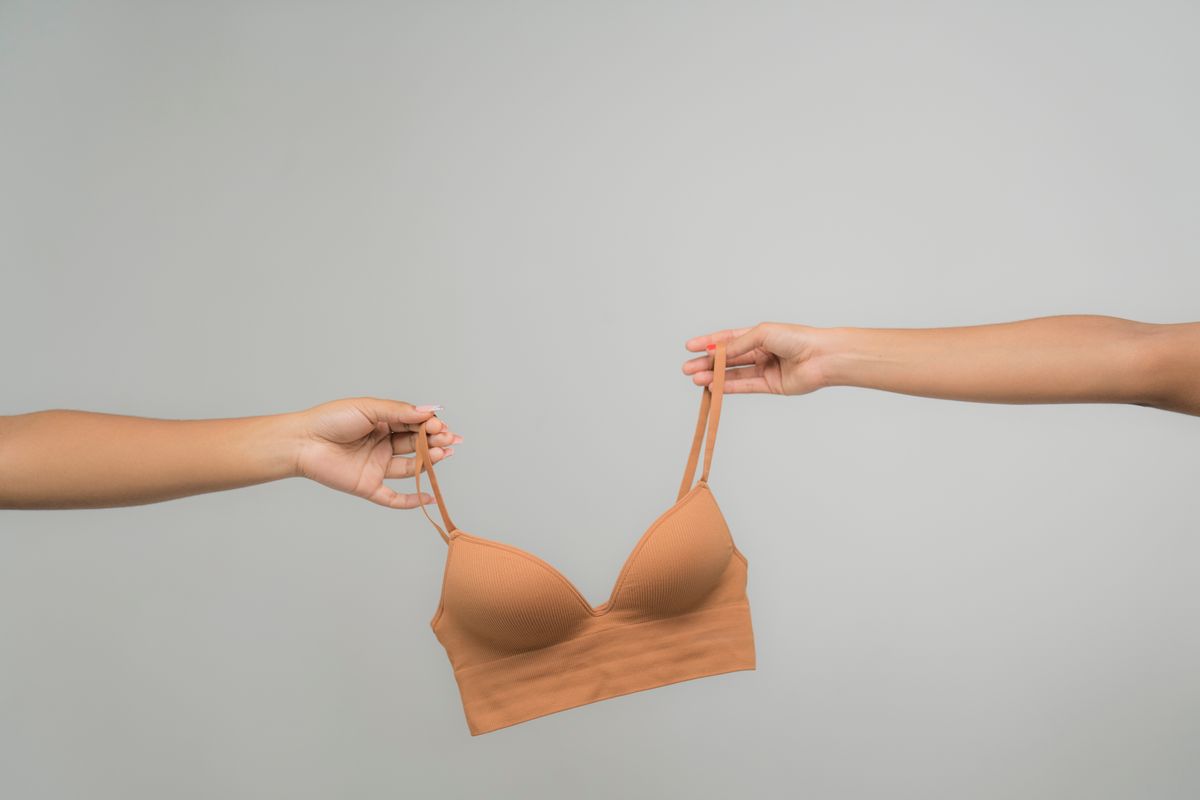
If you have a heavy or large bust and can't find a bra that actually supports you — the band rides up, the straps cut in, and the shops stop at a C cup — here's the honest truth: the best bras for a large bust all share the same handful of features: a firm wide band, full cups that hold everything, and wide supportive straps. Get those right and comfort follows. It's not your body that's hard to fit; it's that the right options are hard to find locally.
This is your complete guide: the features that matter, the styles worth your money, the honest take on minimizers and wireless, and exactly where to find your size. No shaming, no "hide your shape" nonsense — just what actually holds a full bust comfortably, and how to get it without trekking from shop to shop.
What to look for in a bra for a heavy bust (7 key features)
Think of carrying a heavy tote bag: the flat base under it carries the weight, while the handles just stop it tipping. Your bra works the same way — the band is the base, the straps are the handles. For a heavy bust, that base has to be strong. Here's the checklist:
- A firm, wide band. Most support — fitters say around 80–90% — comes from the band, so for a large bust it needs to be snug and wide enough to anchor properly. A thin, loose band is the number-one reason heavy busts feel unsupported.
- Full-cup coverage. Cups that hold the whole breast stop the spillage and bounce that demi cups can't. (More on full-cup vs balconette below.)
- Wide, cushioned straps. They spread the weight so it doesn't carve grooves into your shoulders. Skip the spaghetti straps.
- Three or four hooks and a wider back wing — they spread the tension and resist riding up.
- Side-support panels (or side boning) that gather tissue in from the underarm and keep it in the cup.
- A supportive cup fabric, not flimsy stretch lace that gives way under weight.
- The right size to begin with. None of the above works in the wrong size — and most full-busted women are in the wrong one (see the mistakes section).
Full coverage vs balconette — which is right for a large bust?

For everyday support on a full bust, full coverage wins. The cup comes up higher and holds more of the breast, so there's no overflow at the top and far less bounce. It's the glass that actually holds all the water instead of letting it brim over.
A balconette lifts the bust and gives a lovely lower neckline, but it only covers the bottom half — so on a fuller or top-heavy bust, the top spills over. That doesn't make balconette "bad"; it makes it an occasion bra for a particular outfit, not your daily workhorse. If you keep spilling over the top, that's your sign to choose full coverage for everyday wear.
Here's the quick style map for a large bust:
| Style | Coverage & support | Best for a large bust? |
|---|---|---|
| Full coverage | Holds the whole breast, most containment | ✅ Your everyday workhorse |
| T-shirt (moulded full cup) | Smooth, seamless, good support | ✅ Under fitted tops and shirts |
| Minimizer | Full coverage + redistributes for a smoother line | ✅ When you want less projection |
| Balconette | Lifts, lower neckline, less top coverage | ⚠️ Occasion only — can spill |
| Plunge / demi | Low centre, half coverage | ⚠️ Special outfits, not all-day |
| Sports (encapsulating) | Separates and holds, high impact | ✅ Essential for exercise |
What do minimizer bras actually do? (And their honest limit)

A minimizer bra redistributes breast tissue over a wider, flatter area to reduce how far your bust projects — usually by about an inch, for a smoother line under fitted tops and shirts. For some women that's genuinely useful: less gap in button-up shirts, a sleeker silhouette.
But here's the honest bit, because minimizers are oversold: they smooth, they don't shrink. You won't drop two cup sizes, and a badly fitted minimizer just compresses uncomfortably and flattens your shape. Treat the "minimizing" as a bonus on a bra that already fits well — full cup, firm band, wide straps — not as a magic size-changer. They're most useful when a fuller bust makes button-up shirts gape or a fitted blazer feel too tight across the front; for everyday comfort, a well-fitted full-coverage bra often gives you most of the smoothing without the extra compression anyway.
Underwire vs wireless for a heavy bust
Both can support a large bust beautifully — it comes down to what you want, not a rule.
- Underwire gives the most lift, shape, and containment. The wire cradles each breast and stops side-to-side movement. For many full-busted women it's the most supportive everyday option — as long as it's the right size, so the wire sits in the crease, not on tissue (a poking wire means wrong fit, not a bad wire).
- Wireless trades a little lift for comfort and breathability. A well-built wireless bra — firm wide band, encapsulated (separate) cups, wide straps — genuinely supports a heavy bust, and it's far kinder in the heat. A soft, flimsy bralette won't; the structure has to be there.
In plain terms: underwire for maximum shape, a structured wireless for all-day comfort. Wires aren't dangerous — that's a long-debunked myth — so choose on comfort, not fear.
How to choose between them: if your bust is heavy and you want a defined shape under fitted clothes, start with a good underwire and make sure the wire sits flat in the crease. If wires have always annoyed you, or you're dressing for a long, hot day, reach for a structured wireless with moulded cups and a wide band. Many full-busted women keep both: an underwire for "out" and a soft wireless for home. Neither is more "correct" — the firm band and full cup are what actually do the supporting in both.
Sports bra for a large bust — non-negotiable
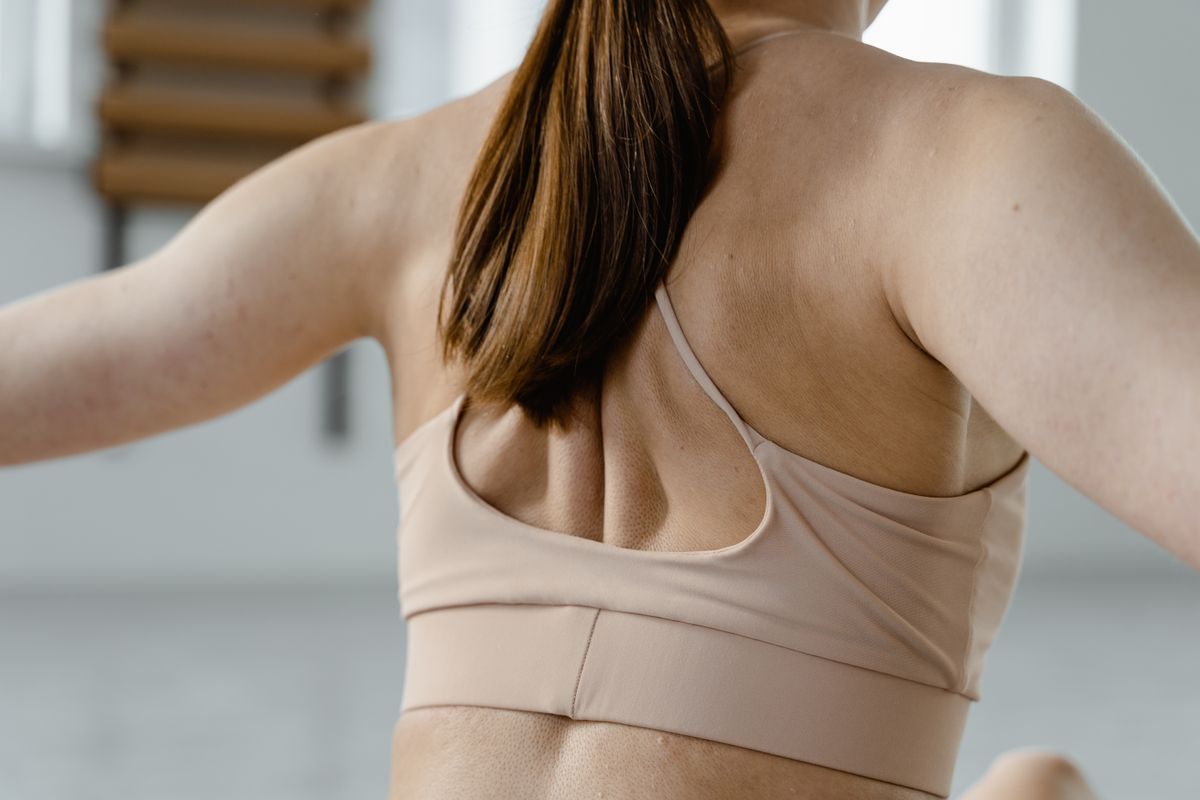
If you exercise, a proper sports bra isn't optional. Unsupported breasts can move up to ~15 cm when you run — in a 3D figure-of-eight, not just up and down — and most active women report breast pain without proper support (University of Portsmouth research). For a large bust, an everyday bra simply can't control that.
Look for a high-impact sports bra that encapsulates (separate moulded cups) rather than just squashing everything flat, with wide straps, a firm wide band, and ideally a racerback or adjustable straps. Encapsulation plus a little compression is the combination that actually holds a heavy bust still.
A quick way to test one in the changing room: jog on the spot for ten seconds. If your bust barely moves and nothing spills out the top or sides, it's doing its job. If you bounce or escape, size down the band or up the cup and try again. And because sweat and washing wear sports bras out faster, treat them as a replace-every-6-to-12-months item, not a buy-once. One genuinely supportive sports bra does more for your comfort (and your motivation to exercise) than three half-hearted ones.
Is your large-bust bra actually fitting? (the full-bust fit check)
Before you blame a style, run a fit check — most "unsupportive" bras on a large bust are just the wrong size. Put the bra on, do the scoop (lean forward, settle every bit of tissue into the cups, stand up), then check:
- Band: firm and level all the way around, not riding up your back. Two fingers slide under it, no more. On a heavy bust the band should feel like the main event.
- Cups: smooth and full — no overflow at the top, sides, or underarm; no empty gaping either.
- Centre gore: the panel between the cups lies flat against your breastbone. Floating means the cup is too small.
- Straps: snug but not load-bearing — a finger slides under, and they don't carve grooves.
- The lift test: in the mirror, your bust should sit roughly midway between your shoulders and elbows. If everything's sagging low, the band (not the straps) needs to do more.
If it fails any of these, the bra isn't wrong — the size is. That's a sister-size or a re-measure away, not a lost cause.
Where to find D cup and above bras

The single biggest problem for full-busted women isn't their body — it's availability. Here's how to beat it:
- Don't accept the shelf as your limit. If a shop "only goes up to C," that's their stock, not your size. The sizes exist.
- Shop brands that specialise in extended sizes. Dedicated full-bust labels carry up to an H cup and beyond, with full-coverage, minimizer, and plus-size ranges — they're the ones to seek out for D-and-above cups. Many big high-street lingerie brands also carry fuller, structured styles.
- Use online for range. Brand websites and online retailers carry far more sizes and styles than physical shops, with size charts you can read before buying and return policies to lean on. Search your sister sizes too — a sold-out 36DD may be in stock as a 38D.
- Heat note: in hot, humid weather, prioritise breathable cotton or modal in a structured wireless or a light underwire — full support without the all-day sweat of heavy synthetics. Keep three or more in rotation so the elastic (which a heavy bust tires faster) gets to recover between wears.
Common mistakes large-busted women make
Most "I can't find a bra that fits" stories come down to a few fixable habits:
- Wearing too big a band and too small a cup. The classic. A bigger bust does not mean a bigger band number — it usually means going down a band and up a cup (sister sizing), so a 38C is really a 36D or 34DD.
- Buying by S/M/L. Those fit almost no full bust well. Get your actual measurements and shop by band-and-cup.
- Tightening the straps to compensate. That just digs into your shoulders. Fix the band instead — it's the same root cause behind shoulder pain.
- Living in worn-out bras. A heavy bust kills elastic faster; once the band only works on the tightest hook, it's done (usually 6–12 months).
- Settling for a push-up or demi as a daily bra. Lovely for an occasion, not built to support a full bust all day.
- Believing "expensive" automatically means "supportive." It doesn't. A well-fitted affordable local bra in your true size beats a designer one in the wrong size every single time. Spend where it counts — construction and fit — not on a label.
- Hanging on to a favourite bra long past its life. When the band only holds on the tightest hook and the elastic looks tired, it has stopped supporting, no matter how much you love it. Retire it kindly and let a fresh one do the work.
The thread running through all of these: a large bust doesn't need a bigger number or a pricier label — it needs the right size and the right features. Once you stop chasing the band number up and start fitting the cup properly, most of these problems quietly solve themselves.
The bottom line
The best bra for a large bust isn't a single brand — it's a set of features: a firm wide band doing the work, full cups holding everything, wide cushioned straps, and side support. Get your real size (down a band, up a cup if you've been guessing), choose full coverage for every day and a proper encapsulating sports bra for exercise, and shop the brands and websites that actually carry D and above. Support and comfort are not too much to ask for — the options just had to be found.
NovellaFit has no shop and nothing to sell you, so the only thing we're pushing is the fit that works. New here? Meet the site on the about page, or work through the rest of our fit guides one problem at a time.
Frequently Asked Questions
What kind of bra gives the most support for a large bust?
A bra where the support comes from a firm, wide band — not the straps. Look for a full-cup style that holds the whole breast, wide cushioned straps, three or four hooks, and side-support panels. A well-fitted underwire gives the most lift and containment, but a well-built wireless bra with a firm band and separate (encapsulated) cups can support a heavy bust comfortably too. Band first, always.
Do minimizer bras actually make your bust look smaller?
A little — they redistribute tissue over a wider area to reduce projection, usually by about an inch, for a smoother line under clothes. They won't dramatically shrink you, and a badly fitted one just flattens uncomfortably. Think of a minimizer as a smoother silhouette, not a size change. Get the fit right first; the 'minimizing' is a bonus on top.
Is underwire or wireless better for heavy breasts?
Both can work — it depends on what you want. Underwire gives more lift, shape, and containment, which many full-busted women prefer. A good wireless bra (firm band, encapsulated cups, wide straps) trades a little lift for all-day comfort and breathability — lovely in the heat. The wire isn't the enemy; a wire that pokes just means the wrong size or a worn-out bra.
Where can I buy D cup and above bras?
High-street shelves often stop at a C, but the sizes exist — you just shop differently. Brands that specialise in full-bust and extended sizes carry up to an H cup and beyond, with full-coverage and plus-size collections; their websites and online retailers stock far more than physical shops. Read each brand's size chart, lean on return policies, and don't take 'we only have up to C' as your real size — that's their stock, not your body.
Why do my bras never fit even in 'my size'?
Most full-busted women are wearing a band that's too big and a cup that's too small at the same time — the classic mistake. The fix is usually to go down a band and up a cup (sister sizing), so a 38C might really be a 36D or 34DD. A bigger band number is not the answer to a bigger bust; a firmer band and a fuller cup is.