
Why Do My Bra Straps Hurt My Shoulders? 7 Real Causes & Fixes

If your bra straps leave red grooves in your shoulders and a dull ache by evening, here's the first thing to know: bra straps hurting your shoulders is not normal, and it's almost never your body — it's the bra. Nine times out of ten, the real culprit isn't the straps at all. It's a band that's gone too loose, so your shoulders end up carrying weight they were never meant to.
Below are the 7 real causes, each with its fix. Most you can sort in five minutes with the bra you're already wearing.
Bra straps hurting your shoulders? First, the one thing to know

Think of carrying a heavy tote bag. The flat base under the bag holds the weight; the handles just stop it tipping. Carry that bag by the handles alone and they cut into your fingers within minutes.
Your bra works the same way. The band around your ribcage is the base — it's built to carry most of the support, commonly put at around 80–90% of the job. The straps are the handles: they steady the load and keep the cups in place. When the band loosens, that weight slides onto the straps — and onto your shoulders. That's the ache. (It helps to remember breast tissue has no muscle holding it up; it leans on the skin and the Cooper's ligaments, which is exactly why a firm band matters so much.)
So the rule for everything below: fix the band before you touch the straps.
7 reasons your bra straps hurt your shoulders

Cause 1: The band is too loose (your straps are doing its job)
This is the big one — the cause behind most shoulder pain. A loose band rides up your back instead of sitting level, so it stops supporting, and the straps take over. All the weight funnels onto two thin lines across your shoulders.
Quick test: raise your arms. If the band lifts up your back, it's too loose. The fix: go a band size down and a cup up to keep the same cup volume — a 34C becomes a 32D (sister sizing). A new band should fit snugly on the loosest hook, with room to tighten as it relaxes.
Cause 2: The straps are too narrow for your bust
Thin, spaghetti straps concentrate all the pressure onto a tiny strip of skin. The fuller your bust, the worse this bites. It's the difference between a thin plastic bag handle and a wide cloth one carrying the same load.
The fix: for anything above a B–C cup, choose wide straps — they spread the same weight over more skin, so they press and dig far less. Cushioned or padded straps help even more.
Cause 3: The straps are over-tightened
Here's the trap: shoulders hurt, so you tighten the straps to "lift" everything — and the digging gets worse, not better. Cranking the straps just presses them harder into the exact spot that already aches.
Quick test: you should be able to slide one finger under the strap comfortably. If you can't, they're too tight. The fix: loosen them, then sort the band (Cause 1) so the band — not the strap — carries the weight.
Cause 4: The cup is too small, pushing weight forward
When the cup is too small, your breast tissue can't sit fully inside it, so the bra is pulled forward and down. That drag lands right back on your straps and shoulders, and you'll often see spillage over the top or sides too.
The fix: size up the cup (try a sister size so the band stays snug). The cup should be smooth, with no tissue brimming over the edge — like water that won't quite fit a too-small glass.
Cause 5: The bra is old and stretched out
Even a perfect-fitting bra has a shelf life. Band elastic tires with wear and washing — like the elastic in a favourite old pyjama waistband that's gone slack and won't hold anymore. Once the band can't grip, it rides up, and the straps inherit the weight.
The fix: most bras are done in roughly 6–12 months of regular wear. If the band only sits right on the tightest hook and still feels loose, it's not your size that changed — the bra wore out. Replace it.
Cause 6: Posture — and how the wrong bra makes it worse
A heavy, badly supported bust pulls you forward, and you round your shoulders to compensate. That slouch tightens your neck and upper back, which makes the shoulder ache worse — a loop where bad fit feeds bad posture and back again.
The fix: the right band breaks the loop by carrying the weight upright. Pair it with simple chest-and-shoulder stretches through the day — roll your shoulders back, open your chest, and drop your shoulders down from your ears whenever you catch them creeping up. A well-fitted, supportive bra does more for your posture than any "posture corrector" strap, because it removes the forward pull at the source instead of yanking you upright against it.
Cause 7: Sometimes it isn't the bra at all
Most shoulder pain here is pure fit, and fixing the fit fixes it. But not always. If you've corrected the band, straps, and cup and the pain lingers — or you feel numbness, tingling, or pins-and-needles running down your arm or into your hand — that's beyond what a bra change can fix.
That's your signal to stop adjusting and see a doctor. We'll come back to the red flags near the end.
How to adjust the straps and band correctly

Most women have never been shown the right order. Do it like this, in front of a mirror:
- Band first. Fasten on the loosest hook that still feels snug and level all the way around. Raise your arms — if it rides up, go tighter (or down a band size).
- Then the straps. Tighten only until they're gently in contact, then check the finger test: one finger should slide under with a little room. No more.
- Scoop the cup. Lean forward, settle each breast fully into its cup, and stand up. This stops tissue dragging the bra forward onto your straps.
- Re-check at the back. The band should sit level with the front, not riding up between your shoulder blades.
Two minutes, and most strap pain eases on the spot — because the band is finally doing its job.
When should you replace your bra?
A worn-out bra can't be adjusted back to life. Replace it when you notice:
- The band only feels supportive on the tightest hook (you've run out of room to tighten).
- The band rides up your back no matter what you do.
- The straps won't stay tightened, or the elastic looks wavy and tired.
- Visible stretching, thinning fabric, or a cup that's lost its shape.
Care note: in hot, humid weather, sweat and frequent washing wear elastic out faster, so check your everyday bras every few months. Rotating three or more bras — giving the elastic a day to recover between wears — makes each one last noticeably longer.
Best bras for shoulder pain relief
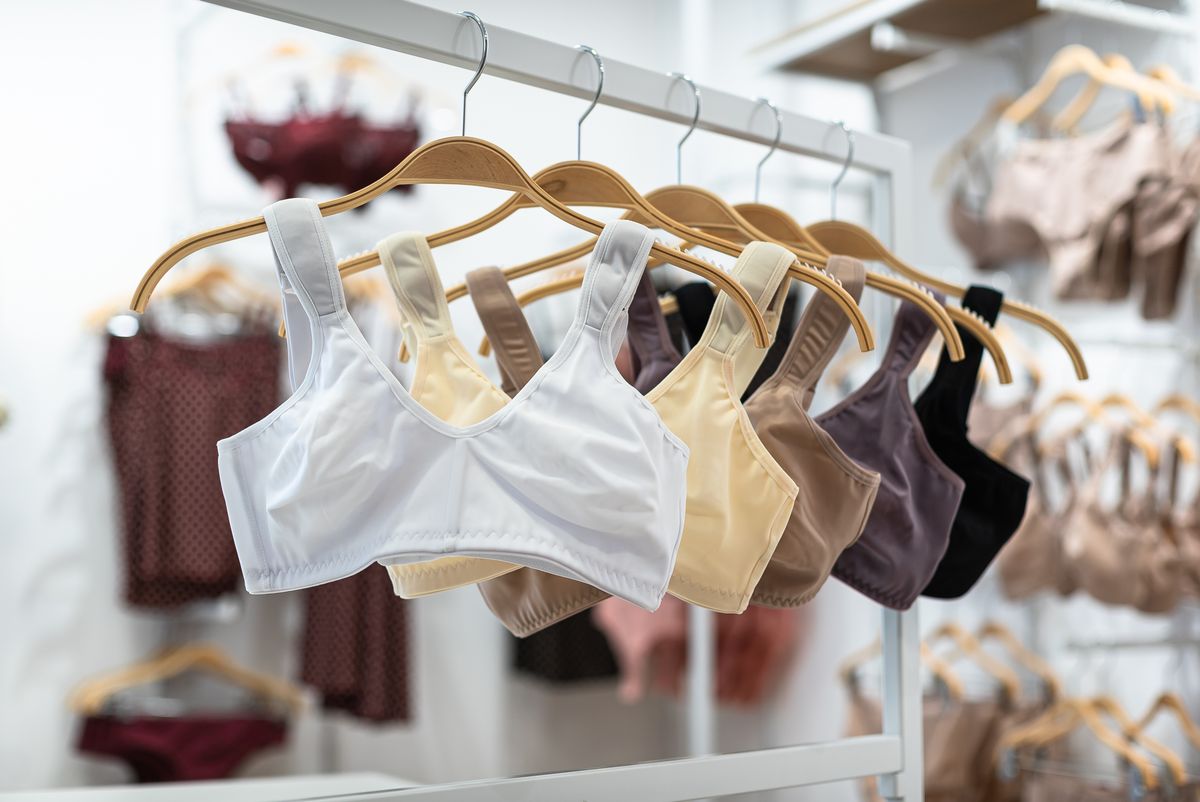
Once the fit is right, the style can take even more pressure off your shoulders. Look for:
- Wide, cushioned straps — the single biggest comfort upgrade for a fuller bust.
- Full-cup styles that hold all the tissue, so nothing drags the bra forward.
- A firm, wider band — more band means more support coming from where it should.
- Front-closure or racerback designs, which pull the straps inward off the tender outer-shoulder spot.
- Cushioned strap covers — slip-on silicone or gel pads that widen and soften any strap you already own, for instant relief on a long day.
Where to look: wide-strap and full-coverage styles are easy to find from most full-bust and lingerie brands; for extended cups (D and up), brand websites and online retailers usually beat the high-street shelf. If you love a bra but the straps still bite, a cheap pair of silicone strap cushions gives real, instant relief while you shop. Not sure of your size to begin with? Start with our guide on how to measure your bra size at home.
When should you see a doctor?

We're a fit-and-comfort site, not your doctor — and shoulder pain is one place to be careful. Fix the bra first; it solves the large majority of cases. But please see a medical professional if:
- The pain continues after you've corrected the band, straps, and cup.
- You feel numbness, tingling, or weakness running down your arm or into your hand.
- The pain is sharp, severe, or spreading, rather than the dull ache of pressure.
- You notice any new lump, swelling, or skin change.
These can point to nerve or joint issues that no bra adjustment will fix — the NHS guide to shoulder pain is a sensible starting read. When in doubt, get it checked. (Worth knowing: that often-quoted "80% of women wear the wrong size" line comes from a small study, so the exact number is shaky — but poorly fitted bras causing shoulder strain is very real.)
The bottom line
Aching shoulders and red grooves are a message, not a life sentence: your band has gone loose and your shoulders are covering for it. Tighten or size down the band, set the straps to the one-finger test, scoop the cups, and switch to wide, cushioned straps — and most of the pain lifts the same day.
NovellaFit has no shop and nothing to sell you, so the only thing we're pushing is the fix that actually works — more about who's behind that. Got another bra problem nagging you? Work through the rest of our fit guides, one at a time.
Frequently Asked Questions
How do I stop my bra straps from digging into my shoulders?
Fix the band first, not the straps. Most digging means the band is too loose, so the straps are carrying weight they shouldn't. Try a snugger band (often one size down, one cup up — a 34C becomes a 32D), then set the straps so you can just slide one finger underneath. Wider, cushioned straps help on top of that, but they're the finishing touch, not the cure.
Are wide bra straps better for shoulder pain?
Yes — wider straps spread the same weight over more skin, so they press less and dig less than thin, spaghetti straps. They're especially worth it for a fuller bust. But a wide strap on a loose band still hurts, because the strap is still doing the band's job. Get the band right first, then choose wide, padded straps for extra comfort.
Should bra straps hold most of the weight?
No. The band around your ribcage is meant to do most of the supporting — fitters commonly put it at around 80–90% of the work. The straps are only there to steady things and keep the cups in place. If your straps are carving grooves into your shoulders, that's the clearest sign the band has gone loose and handed its job to your shoulders.
Can a bra really cause neck and shoulder pain?
Yes. A loose band, a too-heavy load on thin straps, or a bra that pulls you into a slouch can all leave you with aching shoulders, grooves, and even neck tension by the end of the day. The good news is that most of it clears up once the fit is fixed. If pain, numbness, or tingling continues after you've sorted the fit, that's a sign to see a doctor.
Do bra strap cushions or shoulder pads actually work?
They help — a little. Silicone or fabric strap cushions spread the pressure and give real, immediate relief, which is great for a long day. But they're a comfort patch, not a repair: they don't fix a band that's too loose or a bra that's worn out. Use them while you sort the underlying fit, not instead of it.